
See what failed
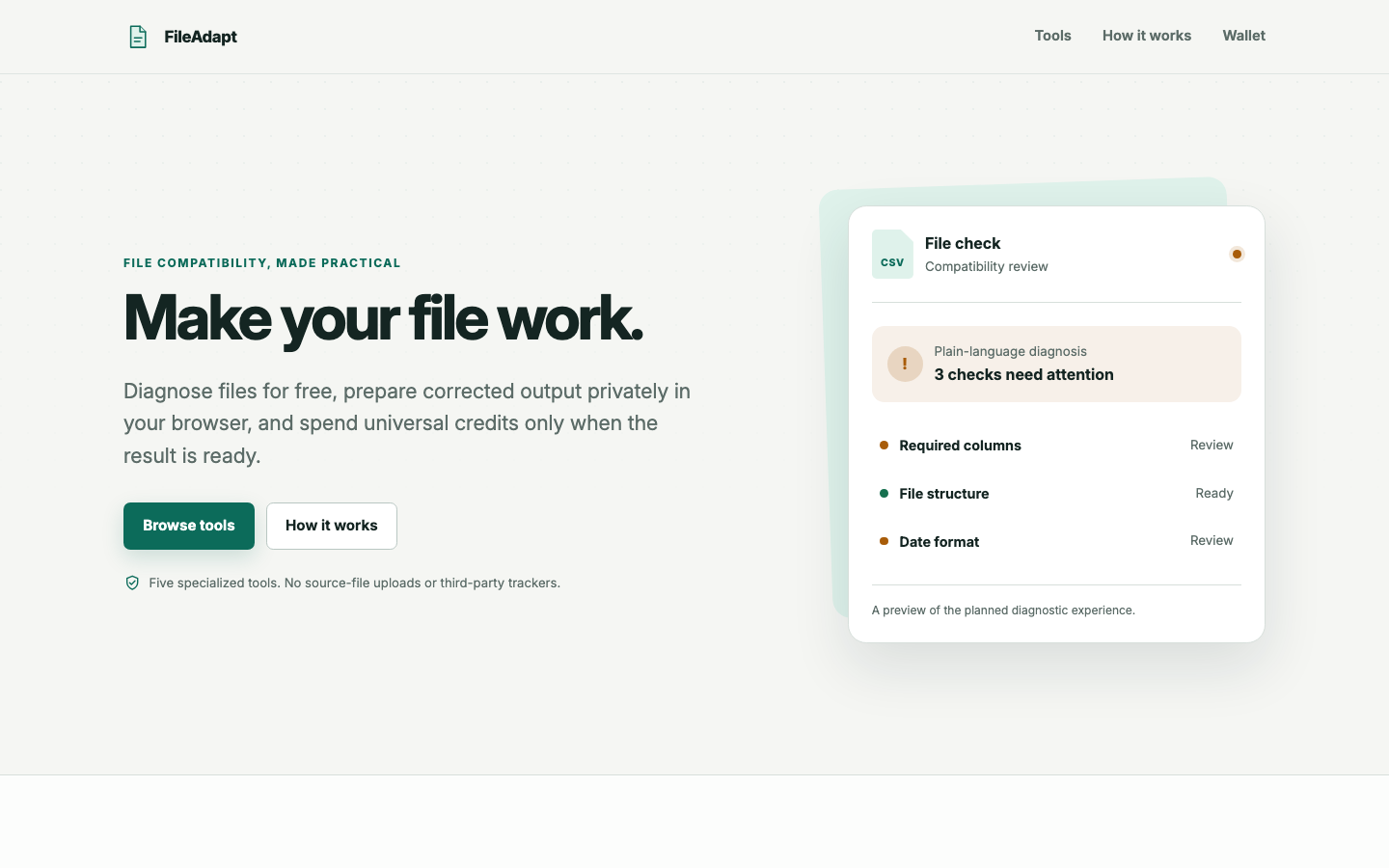
Plain-language diagnostics separate automatic repairs, required decisions, warnings, and blockers.
Focused browser tools that diagnose and repair files rejected by accounting, commerce, banking, and filing systems.
Make rejected files work without surrendering their contents.
Each tool explains supported problems, asks when meaning is ambiguous, and prepares a deterministic output in the browser. The original file remains untouched.
User value
Understand the problem. Make the necessary choices. Prepare a compatible output locally.
Plain-language diagnostics separate automatic repairs, required decisions, warnings, and blockers.
Source files, parsed records, diagnostics, and prepared outputs stay in the active browser session.
The result is a corrected or rebuilt file plus a factual account of what changed and what remains uncertain.
 View full size
Features
Each utility targets one receiving system and states its limits.
Map transaction columns and normalize supported encoding, delimiter, date, number, and whitespace issues.
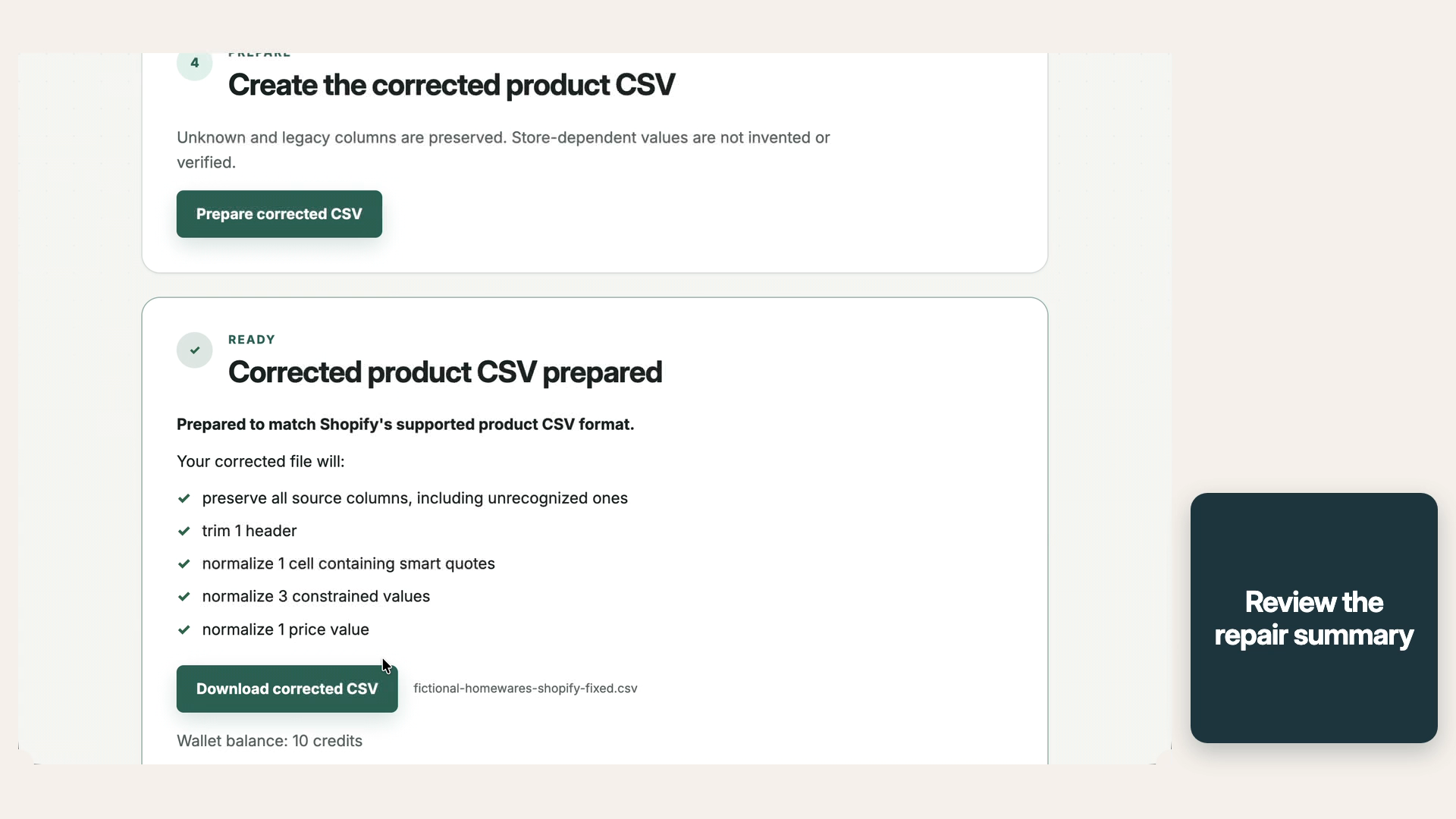
Preserve unknown columns while repairing supported headers and constrained product values.
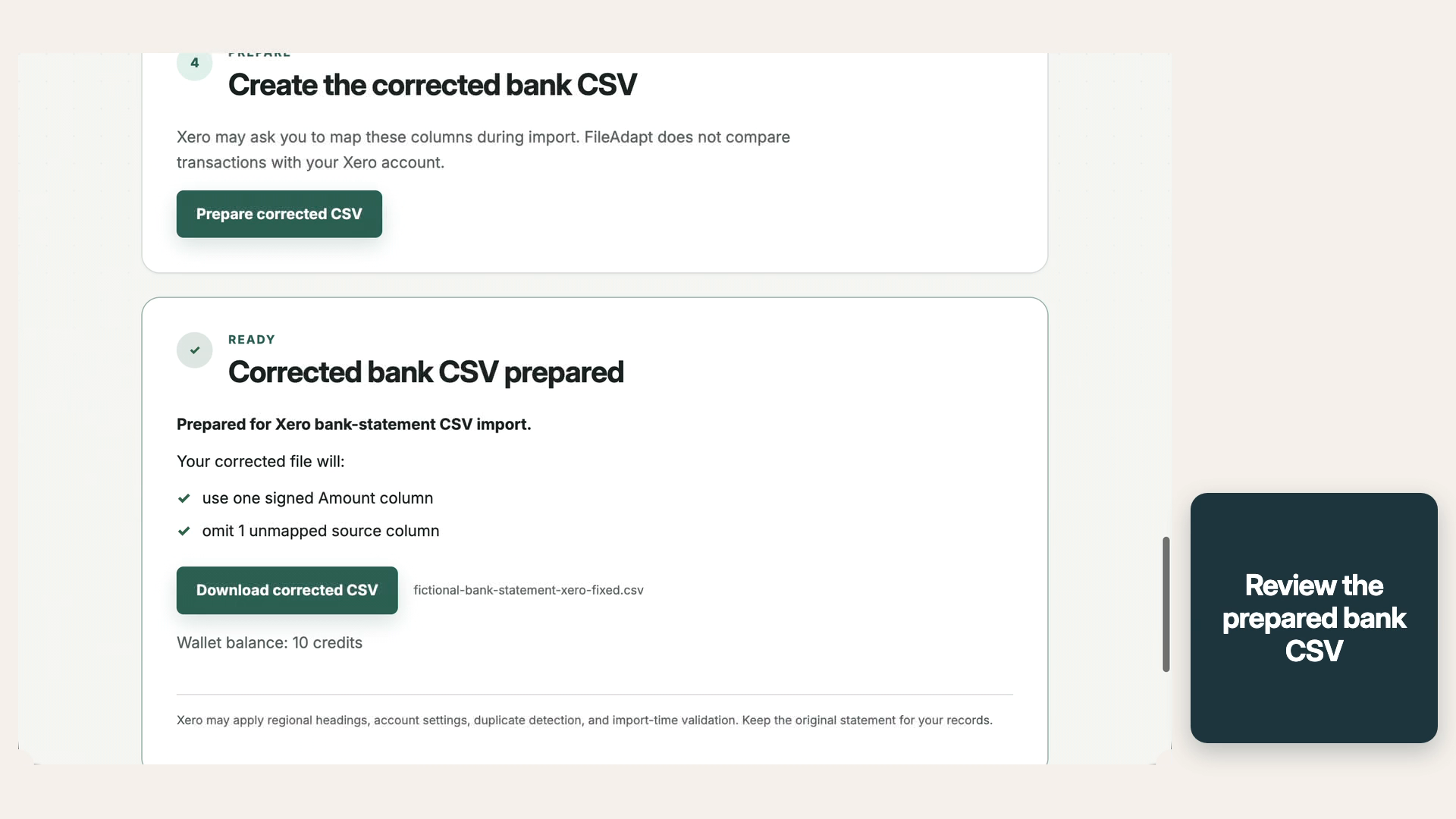
Map bank statement data, confirm money direction, and prepare a supported import layout.
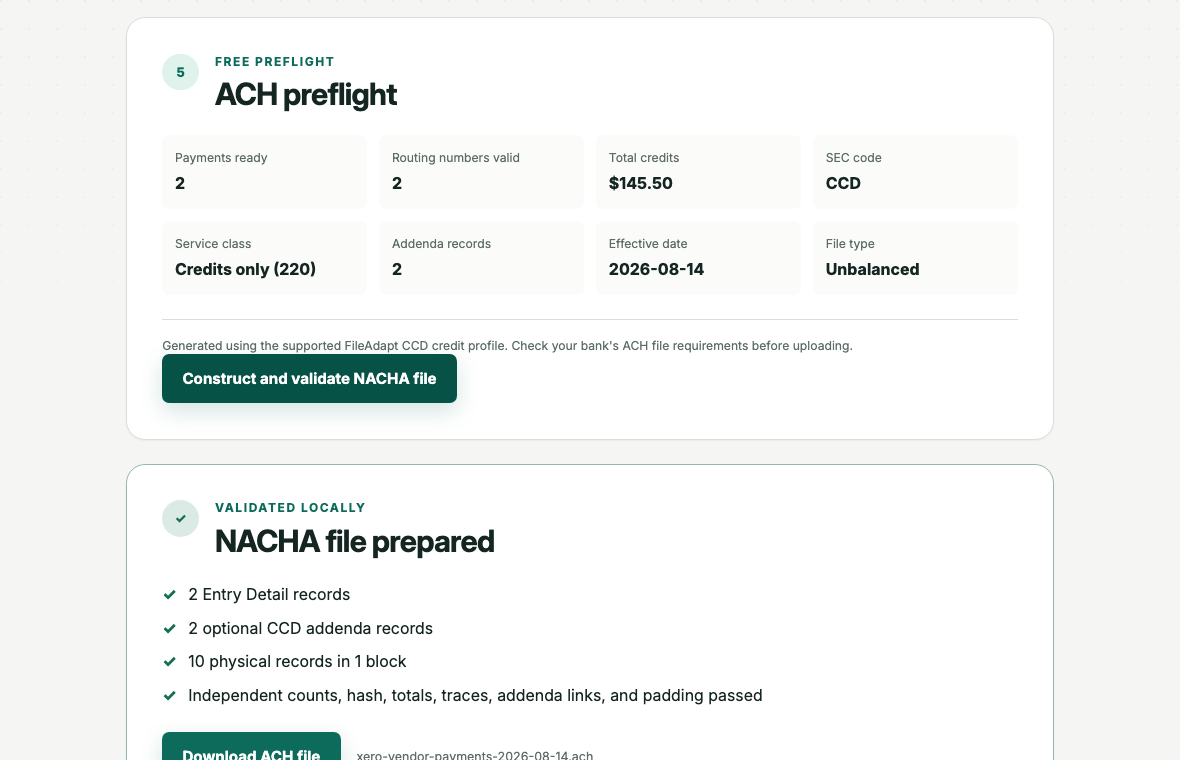
Build one narrow domestic CCD credit batch and validate routing, records, totals, traces, and controls.
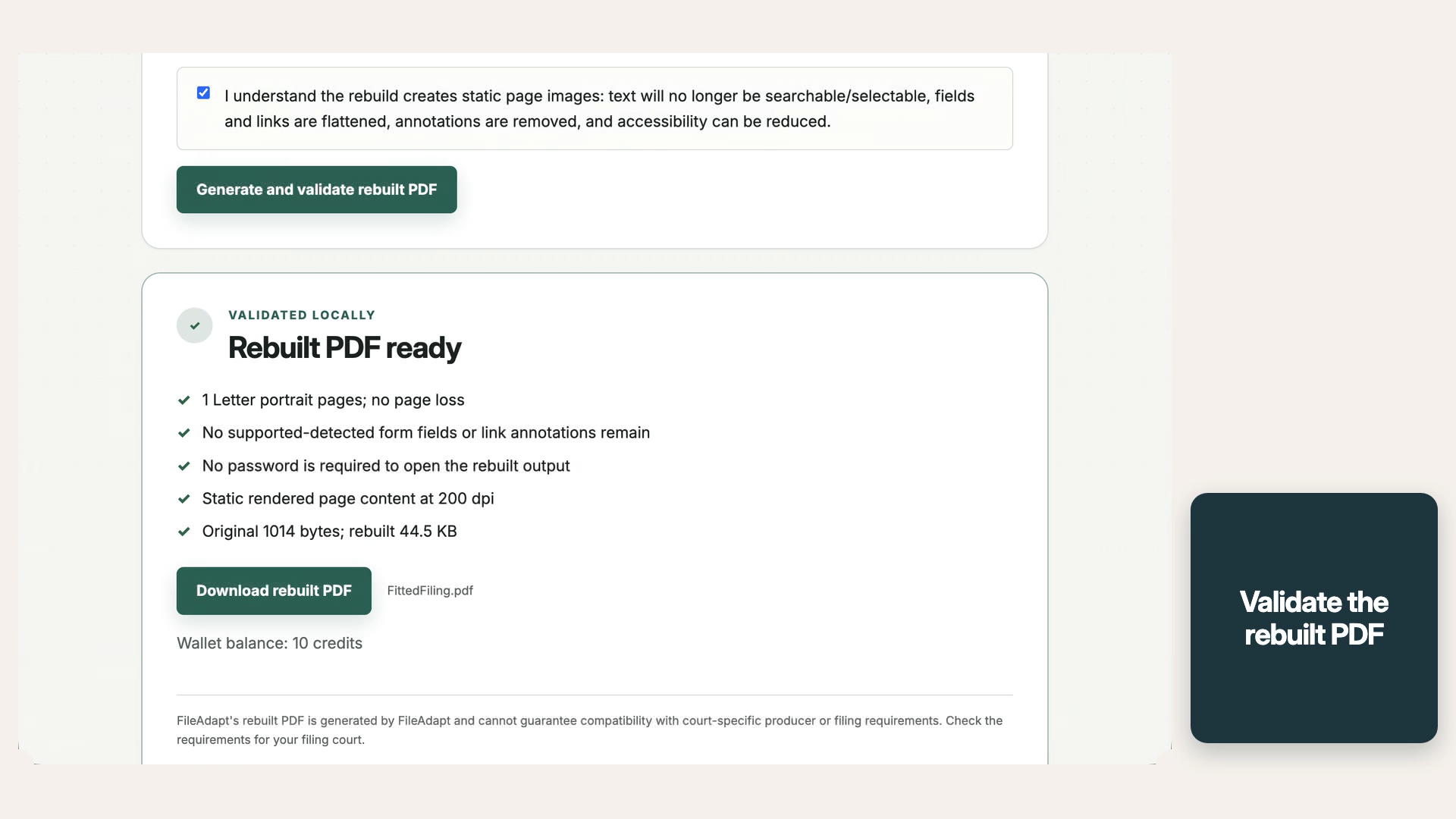
Analyze compatibility and, with approval, rebuild pages for Odyssey or File & Serve workflows.
How it works
The common journey stays consistent while each tool applies its own rules.
Start with the destination that rejected the file, not a generic converter.
Read the CSV or PDF locally. The original remains unchanged.
See what can be repaired, what needs a decision, and what the tool cannot resolve.
Confirm mappings, conventions, directions, or documented consequences when software cannot know.
Generate the output locally. Consequential ACH and PDF results receive an independent check.
In practice
 View full size
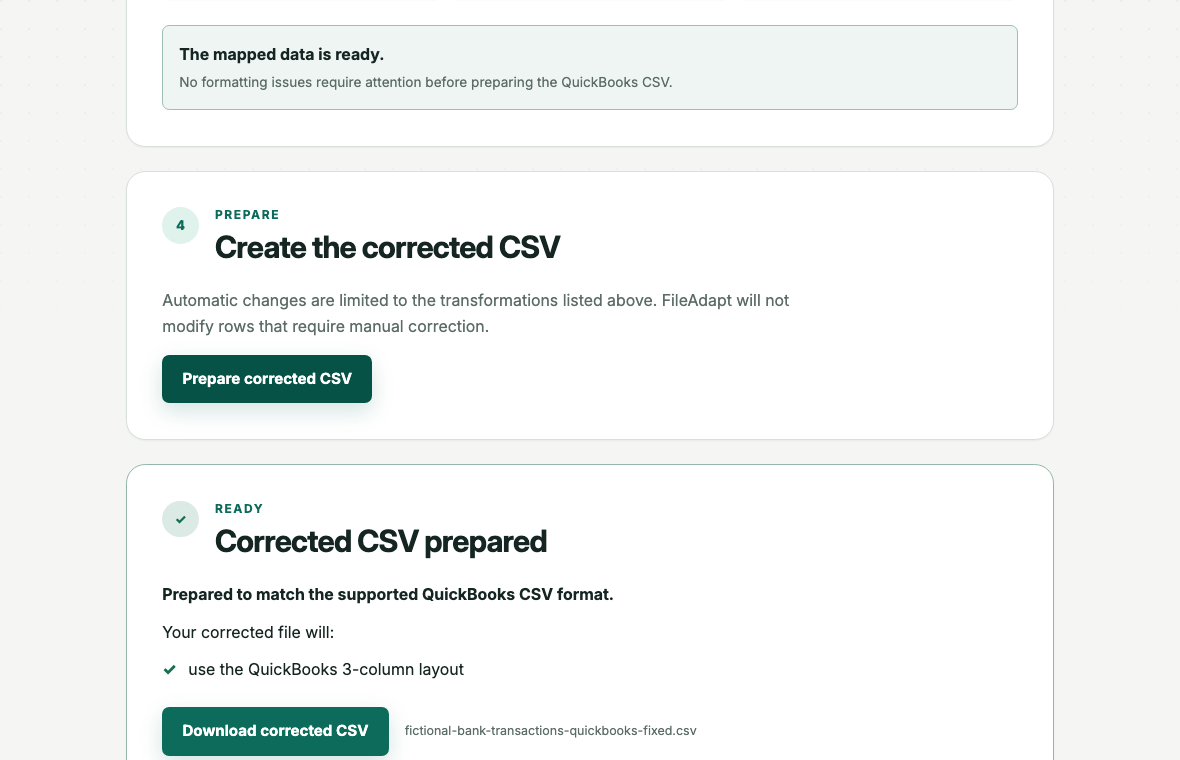
A mapped transaction file is diagnosed, corrected, and prepared for separate import.
 View full size
Supported values are normalized while unfamiliar columns remain intact.
 View full size
A signed Amount column is prepared with explicit disclosures about omitted or unmapped data.
 View full size
The supported CCD credit profile is checked for routing, totals, record structure, and controls.
 View full size
A rebuilt filing document is checked for geometry, fields, links, and rendered content.
Product demos
Product concept
Compatibility work becomes safer when the software is narrow about what it knows.
Useful diagnosis and repair do not require a server copy of the source file.
Dates, number conventions, mappings, and money direction require a choice when they are ambiguous.
Each tool supports a stated workflow instead of promising conversion between every possible format.
Architecture
Tool logic remains separate from the anonymous commerce layer and remote infrastructure.
Remote services receive opaque wallet, checkout, tool, and operation identifiers, not file contents.
No AI, OCR service, or probabilistic repair path is implemented.
Generated ACH and rebuilt PDF files are reparsed and checked before download.
Technology
Development
Five tools, the anonymous wallet, test-mode checkout, broad synthetic validation, and a local launch rehearsal are implemented. Production deployment and live payments are not confirmed.
Implemented
Launch focus
Confirm the production deployment, live payment path, public domain, operator details, support contact, and final pricing before describing FileAdapt as available.
FileAdapt lab notes
Notes about the thinking, architecture, development, and decisions behind this work.
Product demonstration became a tested production system built from scripted journeys, synthetic fixtures, and explicit privacy checks.
The public name, product language, metadata, legal pages, and interface were brought together around one practical promise.
Twenty-six local journeys tested the five tools, wallet, checkout, entitlements, downloads, analytics, and privacy boundary together.
The first visible repository state already records five tools, a privacy boundary, an anonymous wallet, and a substantial validation system.