
Capture several tasks naturally
Tap one prominent control, speak with ordinary conjunctions, dates, places, and context, then stop when the thought is complete.
An iPhone voice-capture instrument that turns natural speech into a reviewable task list, then lets the user edit, share, or create Apple Reminders.
What if speaking several tasks once were enough to create a list you can review?
Visible LISTEN and STOP capture, Apple Speech, layered Apple Intelligence with deterministic fallback, local task storage, review, sharing, Reminders, widgets, and Live Activities keep the flow direct.
User value
Capture errands, follow-ups, appointments, shopping reminders, and quick obligations in ordinary speech without organizing them before you begin.
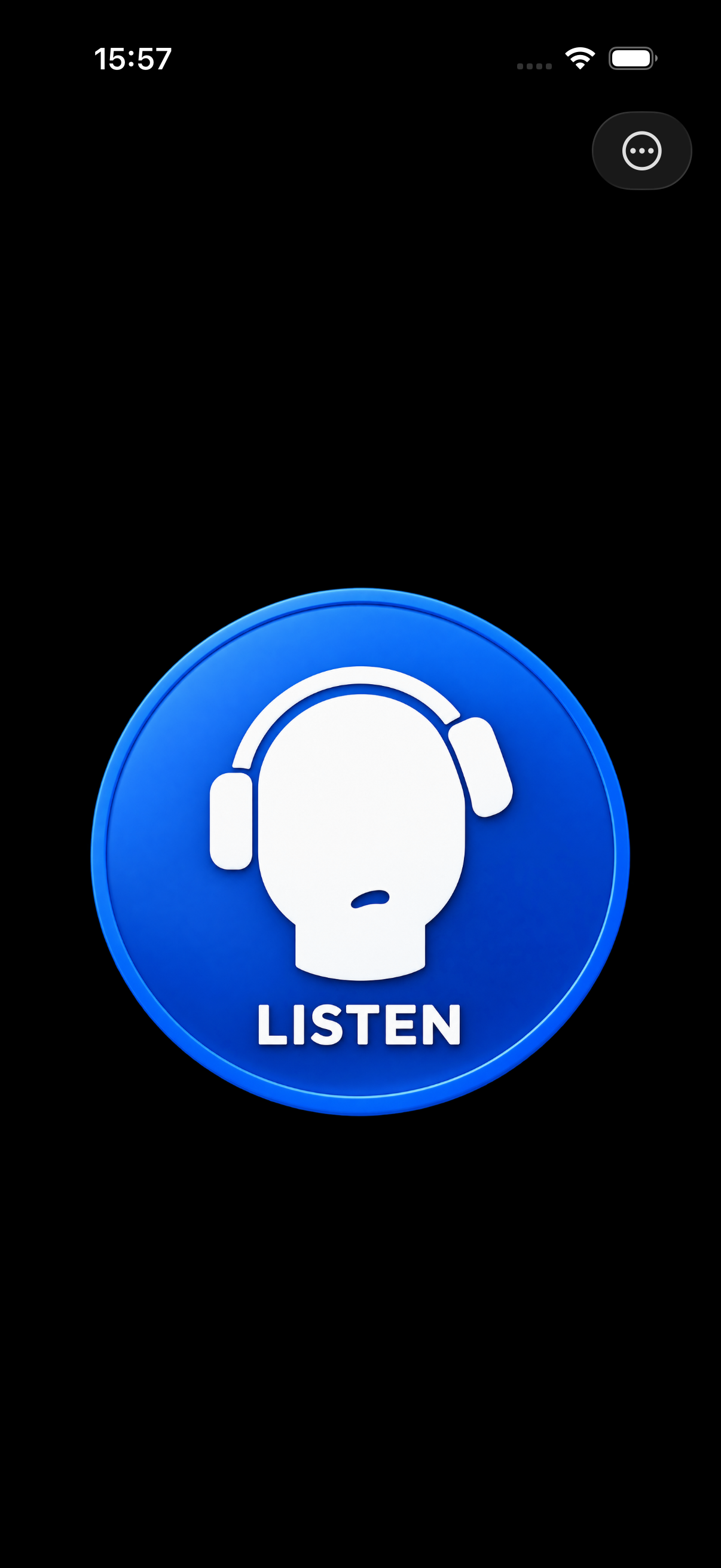
Tap one prominent control, speak with ordinary conjunctions, dates, places, and context, then stop when the thought is complete.
Use validated Apple Intelligence output on supported, ready devices while retaining a deterministic extractor when model assistance is unavailable or disallowed.
Inspect, edit, complete, delete, share, or create Apple Reminders only after the generated task records are visible.
 View full size
Features
The current v1 implementation keeps recording simple and moves correction, sharing, and Reminders into an explicit review surface.
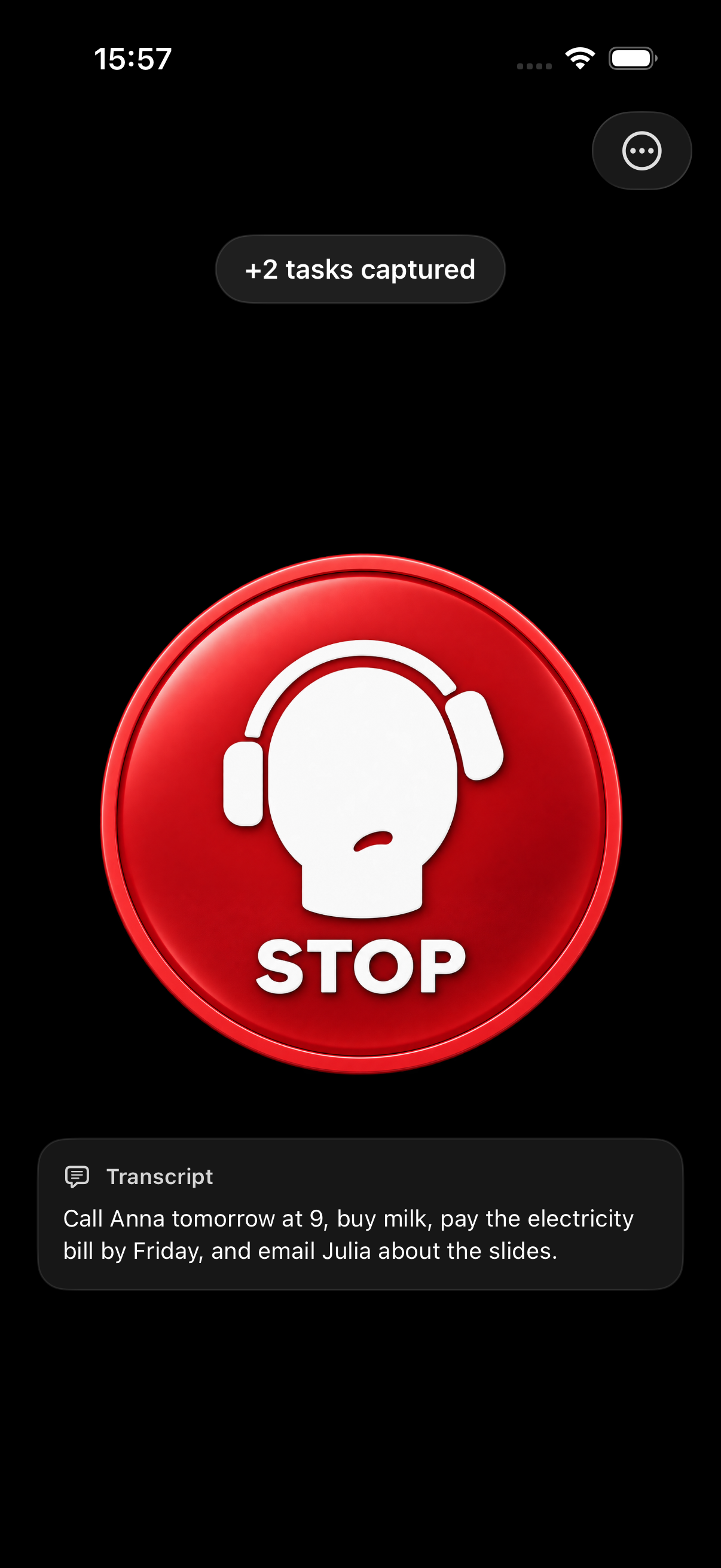
Begin only from an explicit foreground action, show recording state and live transcript feedback, and stop through the same primary control.
Use rules for provisional feedback and fallback, then attempt validated Foundation Models extraction for stable transcripts when the device and access policy permit it.
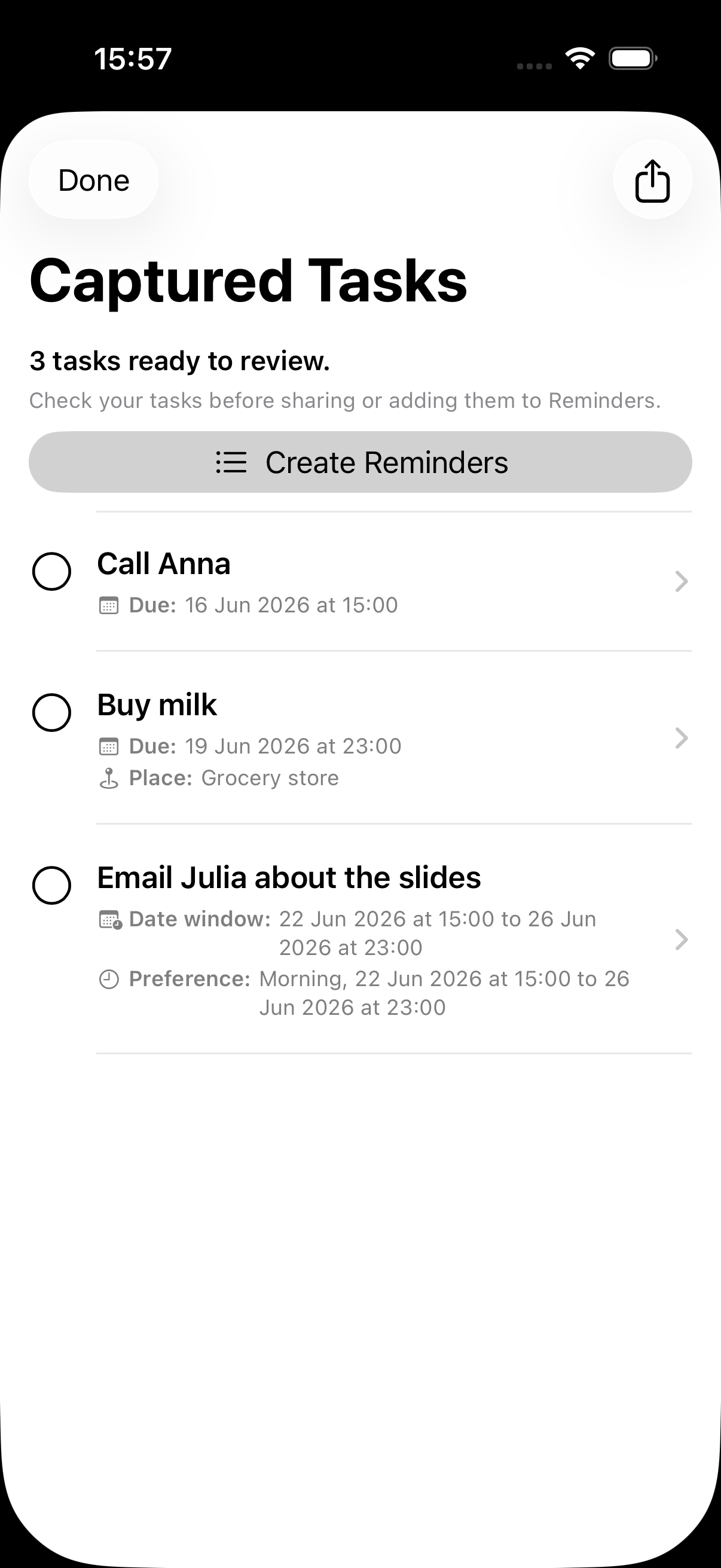
Complete or delete tasks and edit the title, point due date, and place while keeping inferred date windows and context visible.
Store task records in a local JSON file, suppress duplicates, and show calm feedback when loading, saving, or insertion does not succeed.
Share plain text or a text file and create one or several Reminders only after an explicit user action and system permission.
Use a Home Screen widget or URL route to start one visible session, then follow recording, processing, ready, or error states through a Live Activity.
How it works
SayList separates the time-sensitive capture moment from the slower responsibility of checking generated tasks.
Grant microphone and speech permissions when needed and begin one visibly represented recording session.
Describe several obligations in one passage while Apple Speech produces a transcript and rules provide provisional task feedback.
Finalize transcription and send the stable text into the coordinated extraction path.
Validate model-assisted candidates when Apple Intelligence is eligible, or use the rule-based extractor after unavailability, timeout, failure, or invalid output.
Inspect wording, dates, places, and context, then edit supported fields, complete items, or delete mistakes.
Keep tasks locally, share them as text or a file, or create Apple Reminders through an explicit handoff.
In practice
 View full size
The control changes to STOP while the interface shows a current-session task count and the working transcript.
 View full size
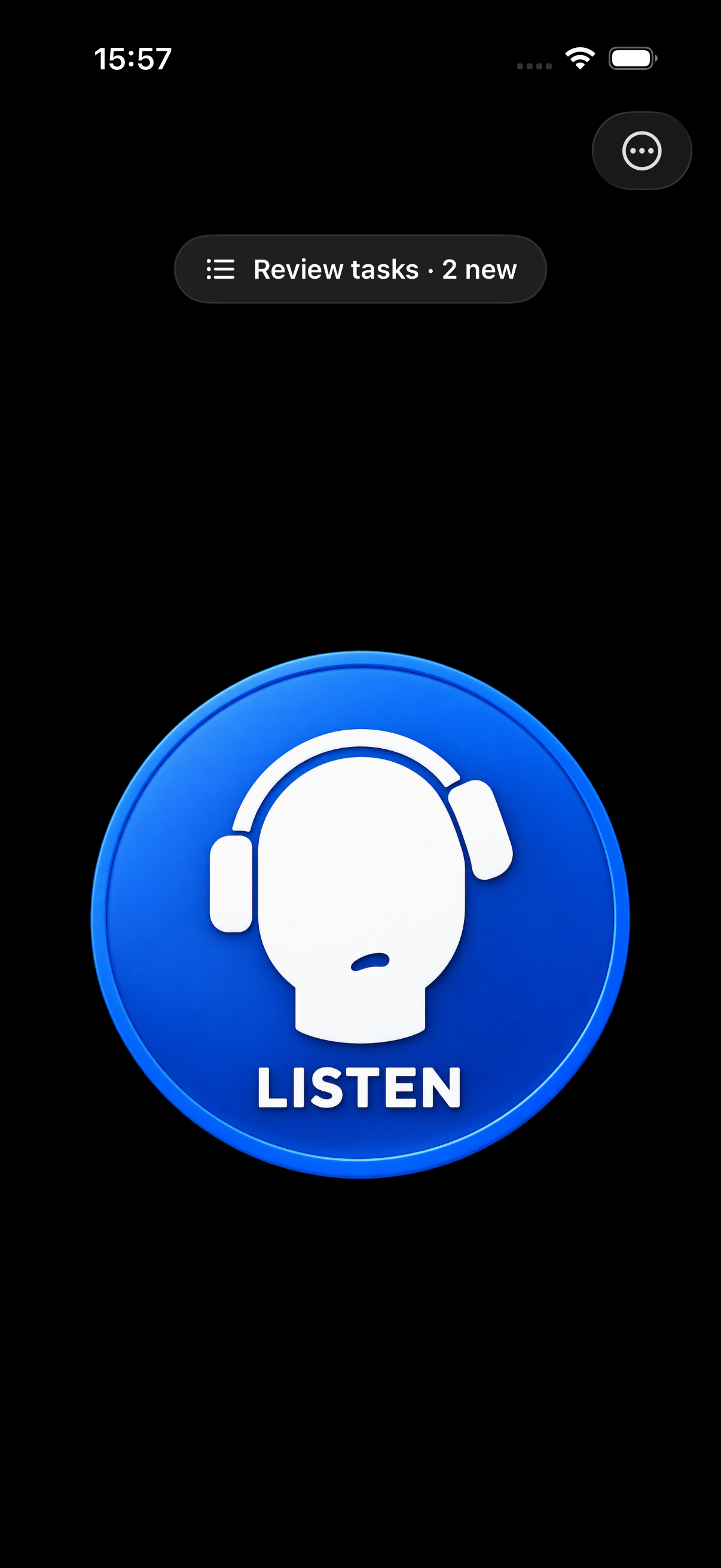
After processing, the main surface returns to LISTEN and exposes the number of new tasks waiting for review.
 View full size
The secondary sheet shows task titles, dates, places, and context before sharing or Reminders creation.
System surfaces
These current simulator captures document implemented surfaces. Final hardware checks, StoreKit behavior, and marketing approval remain pending.
 View full size
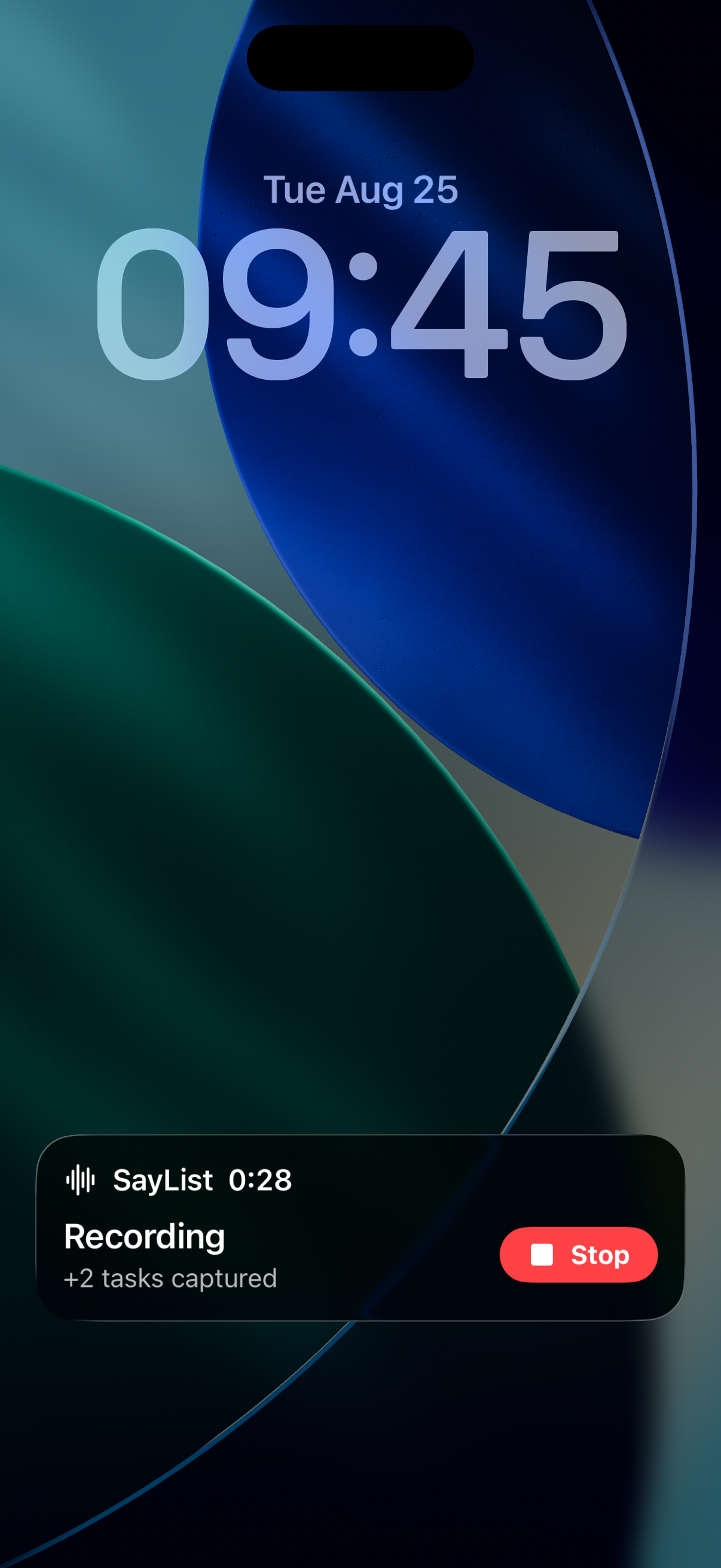
A user-started recording can show elapsed time, current-session feedback, and a Stop action while brief background continuation remains bounded to three minutes.
 View full size
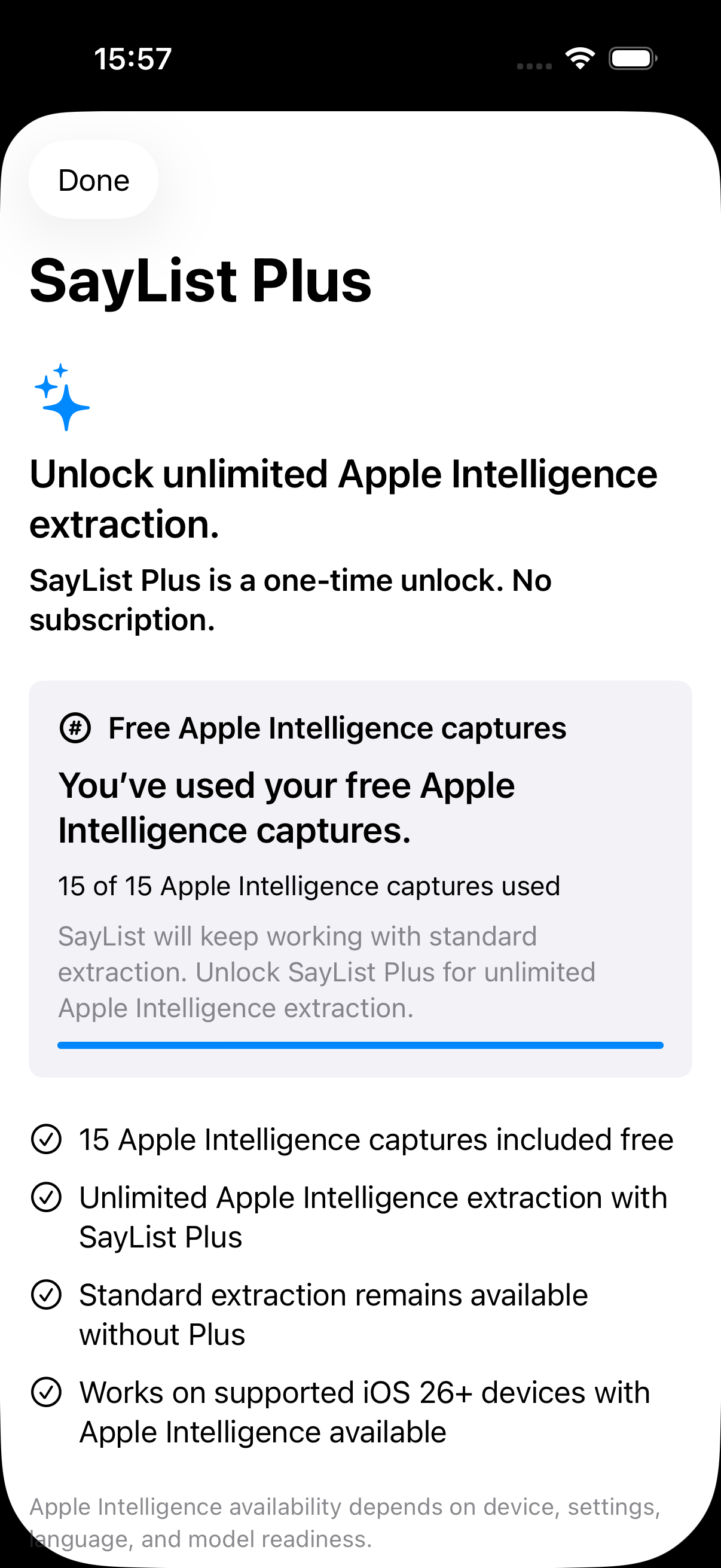
Fifteen qualifying Apple Intelligence captures are included before a one-time Plus unlock, while standard extraction and the core workflow remain available.
Product concept
Speaking is fastest when obligations are still unstructured. Review is where generated wording, dates, places, and context become accountable.
The user should not need to dictate perfect commands or navigate a task hierarchy before preserving what needs to be done.
Model-assisted interpretation can improve natural phrasing on supported devices, while deterministic rules keep the basic product available and testable.
Sharing and Reminders belong after the person can inspect and correct the individual tasks produced from the transcript.
Architecture
The iPhone app owns the visible recording lifecycle, extraction coordination, task review, local persistence, and handoffs. Apple frameworks provide speech, optional model execution, Reminders, StoreKit, widgets, and Live Activities.
Capture begins only from a user action, remains represented in the app or Live Activity, and can continue in the background for at most three minutes after a brief switch.
The deterministic extractor handles provisional work and stable fallback when Apple Intelligence is unavailable, not allowed, times out, fails, or yields no valid tasks.
SayList uses local JSON and contains no app-owned backend, account, analytics pipeline, cloud sync, or cloud language-model endpoint.
New voice capture still depends on Apple Speech availability, and Apple Intelligence behavior depends on device support, settings, language, and model readiness.
Technology
Development
The complete Record, Stop, extract, review, edit, share, and Reminders path is implemented with local persistence, duplicate suppression, widgets, deep links, limited background continuation, Live Activities, Plus entitlement logic, and deterministic evidence tooling. Physical-device sanity, live StoreKit behavior, signing, distribution, required URLs, privacy review, and current marketing assets remain incomplete or unconfirmed.
Implemented
Before launch
Complete the physical-iPhone speech, widget, Lock Screen, interruption, three-minute stop, permission, and Reminders matrix. Validate App Store Connect product discovery, purchase, restore, refund, and revocation, finish signing and upload, supply support and privacy URLs, complete the privacy questionnaire, and regenerate and approve current-interface screenshots and preview media.
SayList lab notes
Notes about the thinking, architecture, development, and decisions behind this work.
Named scenarios, deterministic fixtures, and release gates connected screenshots and demonstrations to testable product state.
Apple Intelligence entered through a validated coordinator while the existing deterministic extractor remained the fallback and live-feedback engine.
A task-list-first prototype became a single-action capture surface with responsibility moved into a secondary review step.
A named set of spoken phrases and expected tasks turned extraction quality from a successful demo into a measurable regression problem.